Philips builds lighting as adaptive infrastructure for modern buildings.
From Amsterdam roots to global project support, Philips combines fixture engineering, controls logic, and application discipline for spaces that need to perform every day.
Vision 2030
Connected light should make buildings easier to understand, operate, and improve.
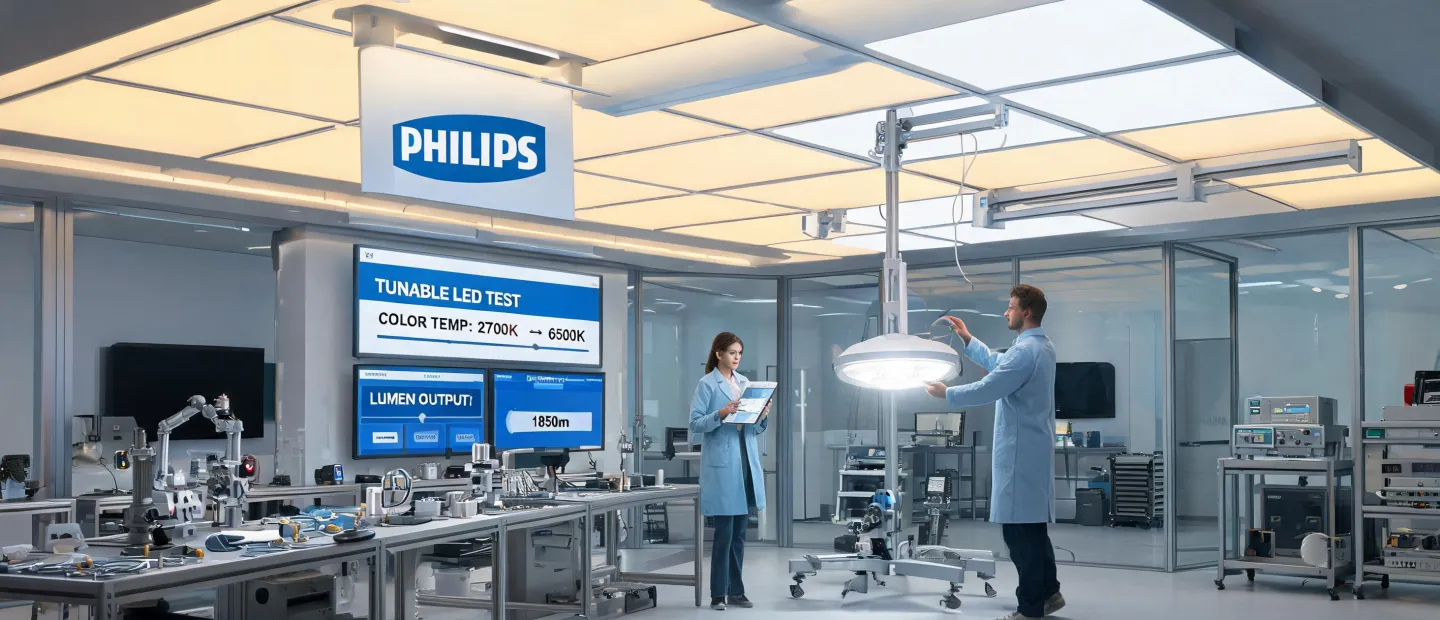
Philips approaches commercial lighting as a long-life building system rather than an isolated purchase. That means the optical performance of the luminaire, the responsiveness of the control layer, the clarity of the documentation, and the maintenance path all matter. Our innovation work is directed toward future-flexible specifications: efficient LED platforms, drivers prepared for controls, sensor-aware spaces, and upgrade paths that respect real construction schedules. For owners and contractors, that creates a better bridge between design ambition and field execution.
That future-facing view still depends on disciplined fundamentals: durable housings, dependable drivers, optical control, documentation clarity, and support for the people who install and maintain the system. Philips keeps innovation connected to these everyday project realities so advanced lighting remains useful after the opening day walkthrough.
Project lighting foundation
Commercial fixture support grows around repeatable documentation and practical service.
LED conversion scale
Energy retrofit programs become a platform for smarter luminaire selection.
Connected intelligence
Controls, sensors, and gateways become central to lighting strategy.
Adaptive buildings
Lighting increasingly supports data-driven operations, comfort, and sustainability goals.
Ecosystem work
Built for collaboration across the project chain.
Philips works with architects, engineers, electrical contractors, distributors, energy managers, and facilities teams. The value is not only a luminaire. It is a shared language for drawings, controls, compliance, commissioning, and lifecycle planning. That collaboration helps teams avoid late-stage mismatches between aesthetics, output, wiring, and operating goals.
SpecifiersContractorsDistributorsFacility TeamsEnergy ManagersTechnology Partners
Bring Philips into the planning conversation early.
Early coordination helps identify better fixture families, cleaner control zones, and a more realistic delivery plan.